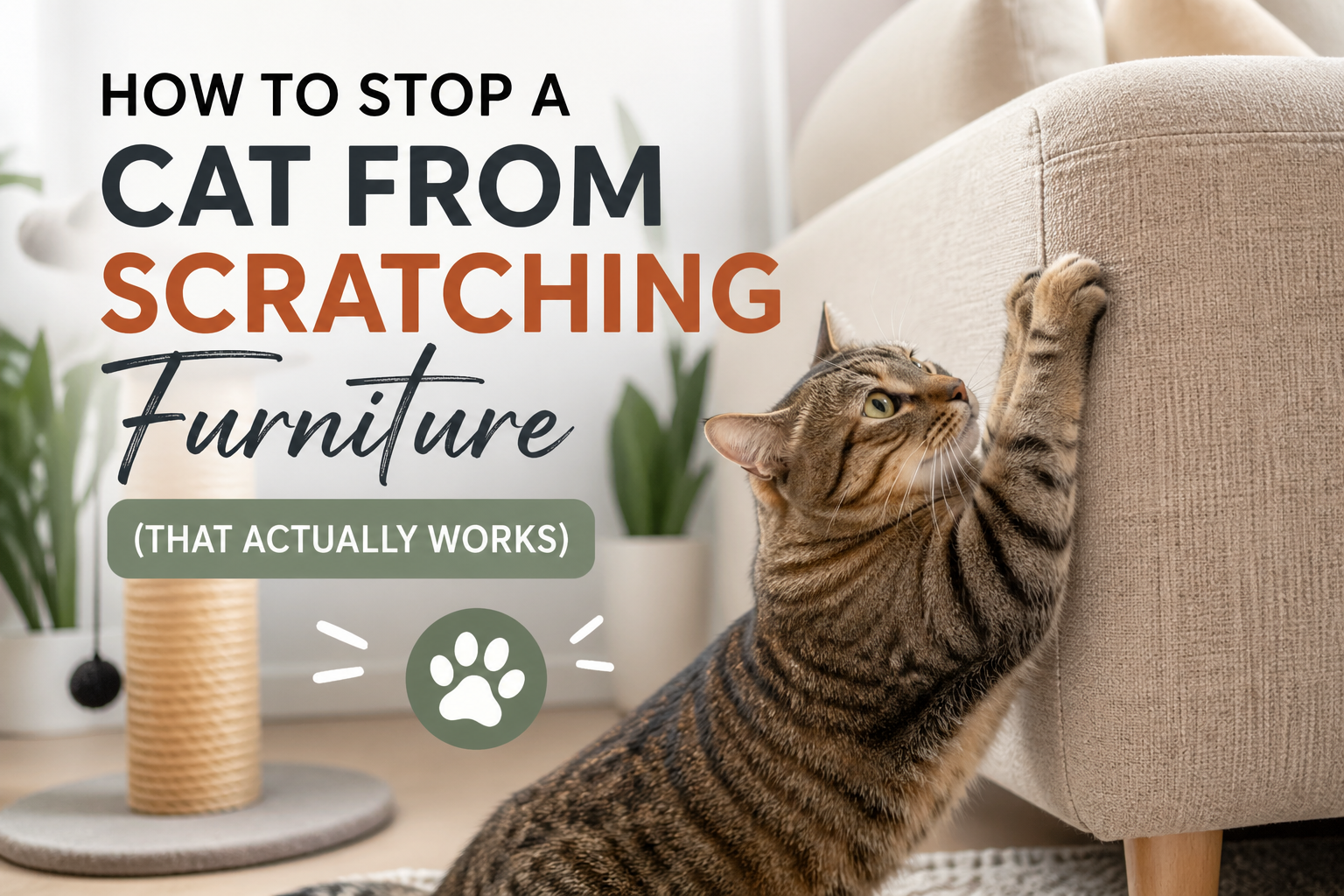
If you’ve ever walked into the room and caught your cat clawing your couch like it personally offended them… you’re definitely not alone.
It’s frustrating. It’s expensive. And it can feel like no matter what you try, they just keep going back to the same spot.
Here’s the honest truth though—your cat isn’t being stubborn or “bad.” Scratching is something they need to do. The trick isn’t stopping it… it’s giving them a better option and making that option the obvious choice.
Once you understand that, everything gets a whole lot easier.
Why Cats Are So Obsessed With Scratching
Cats scratch for a few simple reasons, and none of them have anything to do with trying to ruin your furniture.
They’re:
- Stretching their bodies (especially after naps)
- Keeping their nails healthy
- Marking their space (yes, even indoors)
- Burning off energy or stress
That’s why they usually pick spots like couches, chairs, or doorways—those places are sturdy, noticeable, and feel good to dig into.
The Biggest Mistake Most People Make
A lot of people try to stop their cat from scratching.
That’s where things go wrong.
You can’t take away the behavior—you have to redirect it. If your cat doesn’t have a better option, they’ll keep going back to what works… your furniture.
What Actually Works (Step by Step)
1. Give Them a Scratching Post They’ll Actually Use
Not all scratching posts are created equal.
If it’s too short, wobbly, or tucked in a corner, your cat is going to ignore it.
Look for:
- Tall posts (so they can fully stretch out)
- Something sturdy that doesn’t move when they use it
- Materials like sisal rope or natural wood
And this part matters more than people think:
👉 Put the post right next to the furniture they’re already scratching
You can always move it later—but in the beginning, location is everything.
2. Make Your Furniture Less Inviting
At the same time, you want to make your couch a little less appealing (without being harsh about it).
Simple things that work:
- Double-sided tape (cats hate the sticky feeling)
- Slipcovers or furniture protectors
- A light spritz of a pet-safe deterrent
You don’t have to do this forever—just long enough for them to build a new habit.
3. Make the “Right” Spot Feel Like Their Idea
Cats don’t like being told what to do—but they love thinking it was their idea.
So make the scratching post more exciting:
- Sprinkle a little catnip on it
- Play with toys around it
- Give them attention or a treat when they use it
Once they start using it regularly, you’re over the hump.
4. Keep Their Nails Trimmed
This won’t stop scratching, but it does make a big difference in the damage.
A quick trim every couple of weeks helps a lot. And once you get used to it, it’s really not a big deal.
5. Put Posts Where They Naturally Want to Scratch
Think about your cat’s routine.
They usually scratch:
- When they wake up
- When they enter a room
- Where they spend the most time
So that’s where your posts should go.
Not hidden in a corner somewhere no one ever goes.
6. Don’t Punish—It Just Makes Things Worse
It’s tempting to clap, yell, or spray water when you catch them in the act.
But all that does is make your cat nervous… and a stressed cat is more likely to scratch, not less.
They don’t connect punishment with the behavior—they just learn to avoid you.
7. Make Sure They’re Not Bored
A bored cat will find their own entertainment… and sometimes that means your furniture.
A little daily playtime goes a long way:
- Wand toys
- Balls
- Window watching
- Climbing spots
A tired, stimulated cat is a much better-behaved cat.
The Simple Formula That Works
If you boil it all down, it’s really this:
👉 Give them a better place to scratch
👉 Make your furniture less appealing
👉 Be consistent
That combination is what actually works.
Final Thoughts
Most scratching problems don’t last forever—they just need a little direction.
Once your cat figures out where they should scratch, they usually stick with it. And your furniture finally gets a break.
It’s not about stopping your cat from being a cat.
It’s just about helping them make better choices.