What Every Cat Owner Should Know
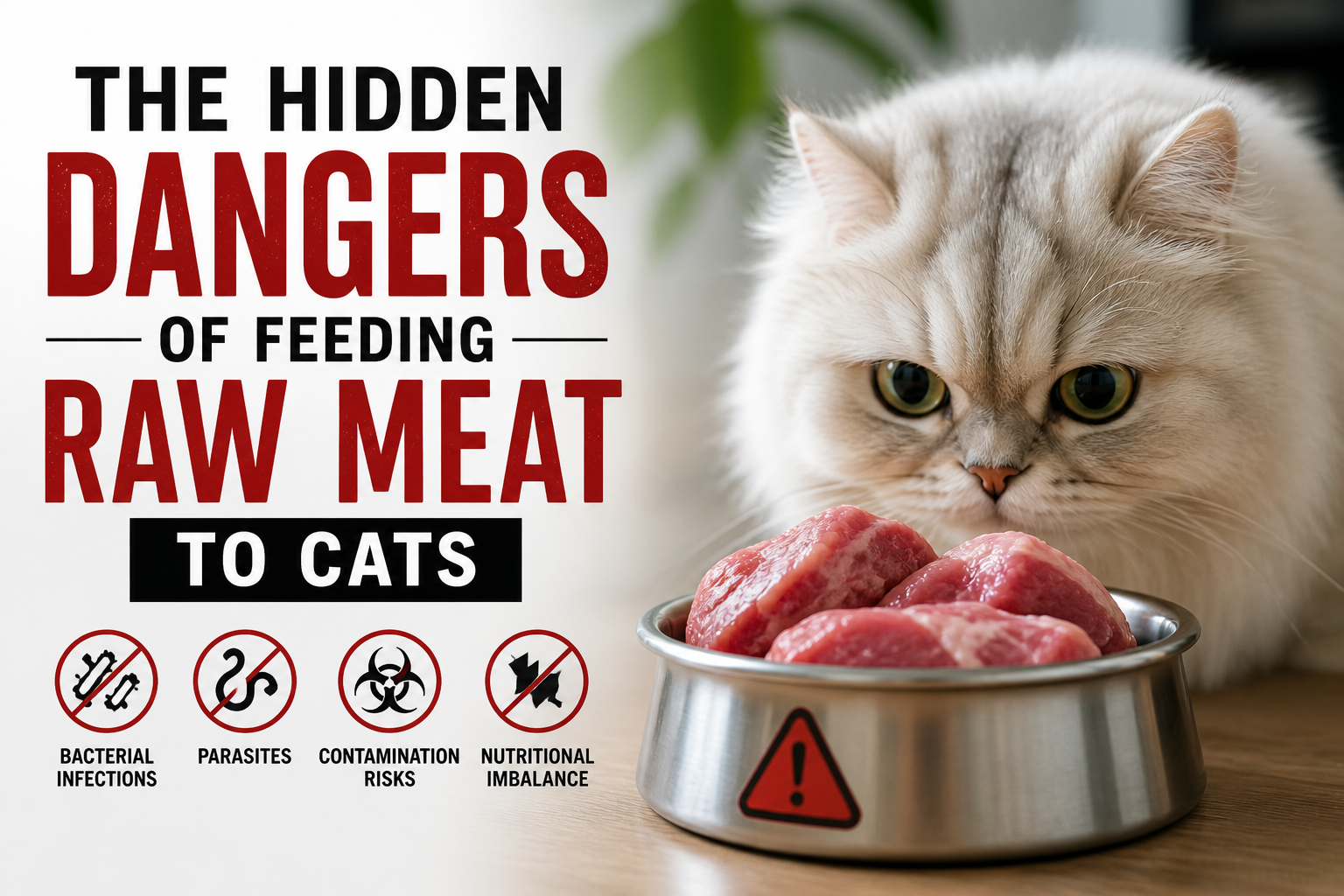
In recent years, raw feeding has become a popular trend among pet owners who want to provide a more “natural” diet for their cats. While the intention comes from a place of love, scientific research and veterinary experts consistently warn that feeding raw meat to cats can carry serious risks—not only for your pet, but for your entire household.
Let’s take a closer look at what the science actually says.
1. High Risk of Dangerous Bacteria
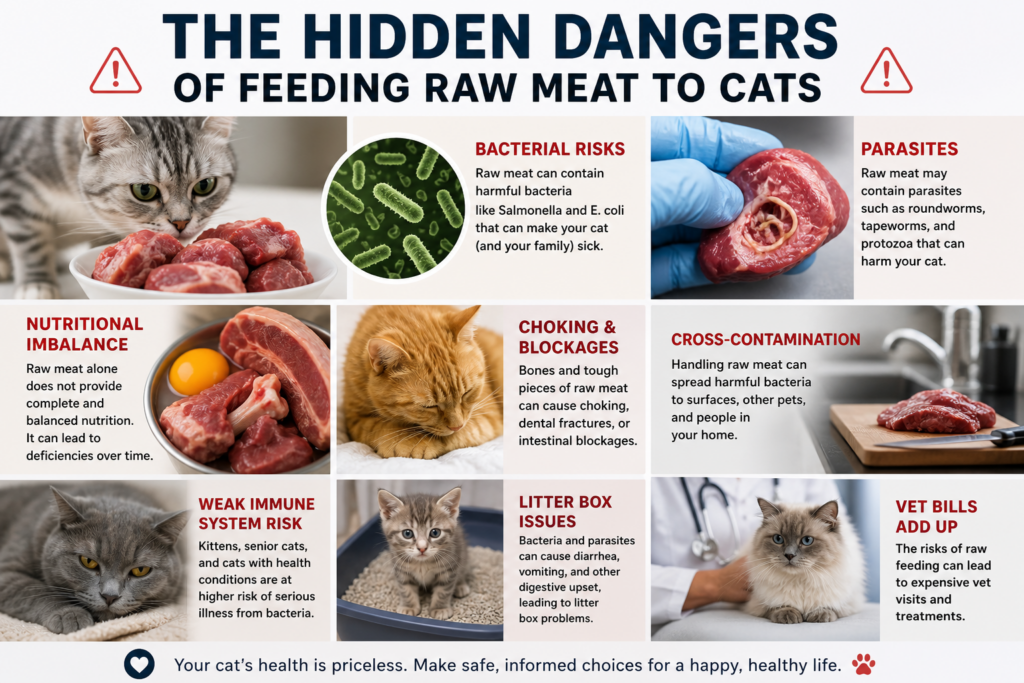
One of the biggest concerns with raw diets is bacterial contamination. Unlike cooked or processed pet foods, raw meat has not been heated to kill harmful pathogens.
Studies have repeatedly found that raw pet foods are more likely to contain dangerous bacteria such as:
Salmonella
Listeria
E. coli
Campylobacter
In fact, research has shown that nearly 25% of raw pet food samples tested positive for harmful bacteria.
Vca
The Centers for Disease Control and Prevention (CDC) clearly states that raw pet food can make both pets and people sick due to these pathogens.
CDC
2. Risk to Humans in the Home
Many people don’t realize that feeding raw meat doesn’t just affect the cat—it can impact the entire household.
Cats eating raw diets can:
Shed bacteria in their saliva and feces
Spread germs onto surfaces, furniture, and hands
Infect other pets and people
Even cats that appear perfectly healthy can carry and spread harmful bacteria without showing symptoms.
Qik&gp2XRiRCUW3QlOi5tkVd
This creates a serious risk, especially for:
Children
Elderly individuals
Pregnant women
Anyone with a weakened immune system
3. Parasites & Antibiotic-Resistant Infections
Raw meat can also contain parasites and drug-resistant bacteria, which are becoming an increasing concern in veterinary medicine.
Recent studies have detected:
Parasites like Toxoplasma gondii
Antibiotic-resistant bacteria in raw pet foods
Pathogens that can lead to infections difficult to treat
These risks are particularly alarming because they can affect both pets and humans and may not respond well to standard treatments.
4. Illness Without Warning Signs
One of the most dangerous aspects of raw feeding is that cats may not show immediate symptoms.
A cat can:
Eat contaminated food
Appear completely normal
Still spread harmful bacteria throughout your home
This “silent carrier” effect makes raw diets especially risky, as problems may not be noticed until illness appears in another pet—or even a human family member.
5. Physical Dangers: Bones & Digestive Injury
Raw diets often include bones, which can pose additional risks such as:
Choking hazards
Broken teeth
Internal injuries to the digestive tract
Life-threatening blockages
Improperly prepared bones can splinter and cause severe damage, sometimes requiring emergency surgery.
6. Lack of Proven Benefits
Despite claims online, there is no strong scientific evidence proving that raw diets provide superior health benefits for cats.
Many of the supposed advantages—such as shinier coats or better digestion—are anecdotal and not supported by research.
Meanwhile, the risks are well-documented and widely agreed upon by veterinary organizations.
7. Veterinary Recommendation: Avoid Raw Diets
Major health authorities, including:
The U.S. Food and Drug Administration
The Centers for Disease Control and Prevention
Veterinary professionals nationwide do not recommend feeding raw meat diets to cats due to the documented health risks.
Final Thoughts
Feeding your cat should never be a gamble.
While raw diets may sound appealing in theory, the reality is clear:
They introduce unnecessary risks that can affect your cat’s health, your home, and your family.
The safest approach is to choose high-quality, properly formulated cat food that has been tested for safety and balanced nutrition.
Because at the end of the day, protecting your cat’s health means making choices based on science—not trends.